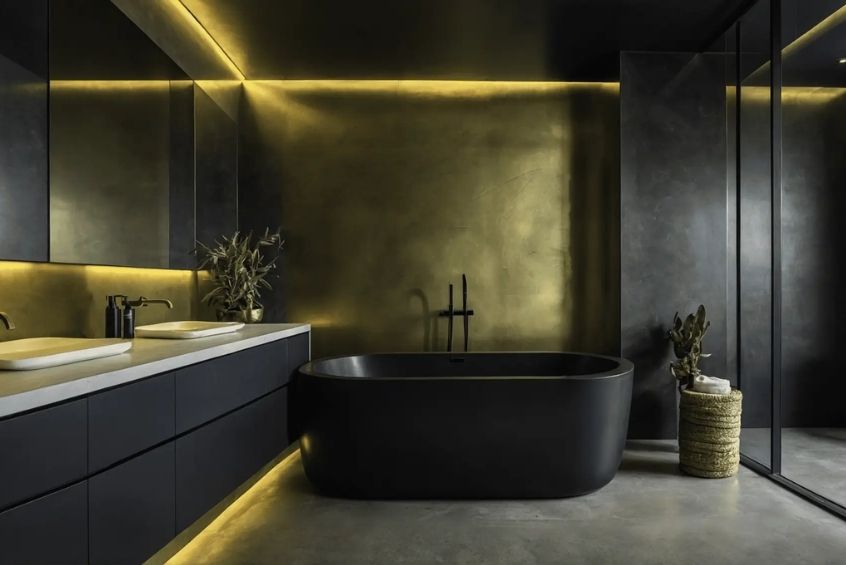
Microcement vs. tile comes down to which costs you count. Basic tile usually costs less per square foot, and a well-laid tile floor can last for generations. Microcement costs more than entry-level tile but goes straight over sound tile, so you skip demolition and most of the downtime.
As the exclusive US distributor of Cement Design microcement, Craftex trains and certifies the installers who apply it. Here is how the two compare as an investment.
Key Takeaways
- Basic ceramic tile usually costs less to install than microcement, but porcelain can cost as much or more.
- Microcement goes over sound existing tile, avoiding removal costs of roughly $2 to $7 per square foot.
- Tile grout needs resealing every year or so, while microcement needs a fresh coat of sealer every few years.
- Neither material is waterproof on its own, so both need a waterproof layer behind them in a shower.
- Tile wins on entry price and track record, and microcement wins on disruption and day-to-day upkeep.
Is Microcement or Tile the Better Investment?
It depends on what is already on your floor and walls.
If the existing tile is sound, microcement closes most of the price gap, because the old surface becomes the base instead of waste.
If you are building a bathroom from bare studs with basic ceramic, tile is usually the cheaper finish and has the longer track record.
Microcement vs. Tile: How Do the Costs Compare?
Tile prices vary more than most homeowners expect because labor and materials both depend on the tile you choose. Installed microcement in Washington State runs $25 to $31 per square foot, including labor and materials, with material alone starting at about $5 per square foot. Rates in other states vary based on local labor costs.
Basic ceramic on a simple floor costs less than microcement, while porcelain can match or exceed it. Removing existing tile adds roughly $2 to $7 per square foot, so on a 60-square-foot bathroom floor, microcement over sound tile avoids $120 to $420 in demolition, plus the dust and lost days.
Which Is Easier to Live With?
Microcement is easier to keep clean. Grout sealer needs refreshing every year or so on floors, and more often in showers, where soap residue and mildew settle first. A microcement surface has no joints, so upkeep is simple: use a pH-neutral cleaner and reapply sealer every few years.
Homeowners have noticed. In the NKBA 2026 Bath Trends Report, 89% of surveyed professionals said homeowners want smaller or no grout lines on floors. Choosing a seamless surface vs. tile answers that directly, although large-format porcelain narrows the gap.
Microcement or Tile Bathroom: Which Handles Water Better?
Neither one, on its own. Tile and grout are water-permeable, so a tiled shower depends on a fully waterproof layer underneath. Microcement works the same way: water-resistant as a material, and waterproof only as a sealed system, over a membrane and under a sealer matched to the room.
In wet areas, the Craftex system adds an extra base coat layer and extra moisture-proofing, then closes the surface with a waterproof sealer.
Our guide to whether microcement is waterproof covers the full build-up.
When Is Tile the Smarter Choice?
Tile is the smarter buy when budget drives the project, or when you want the look of tile, such as a mosaic or herringbone floor. It also wins when the existing surface has to come out anyway because of rot or a failed shower, since the demolition savings disappear and the microcement vs. tile decision becomes finish against finish.
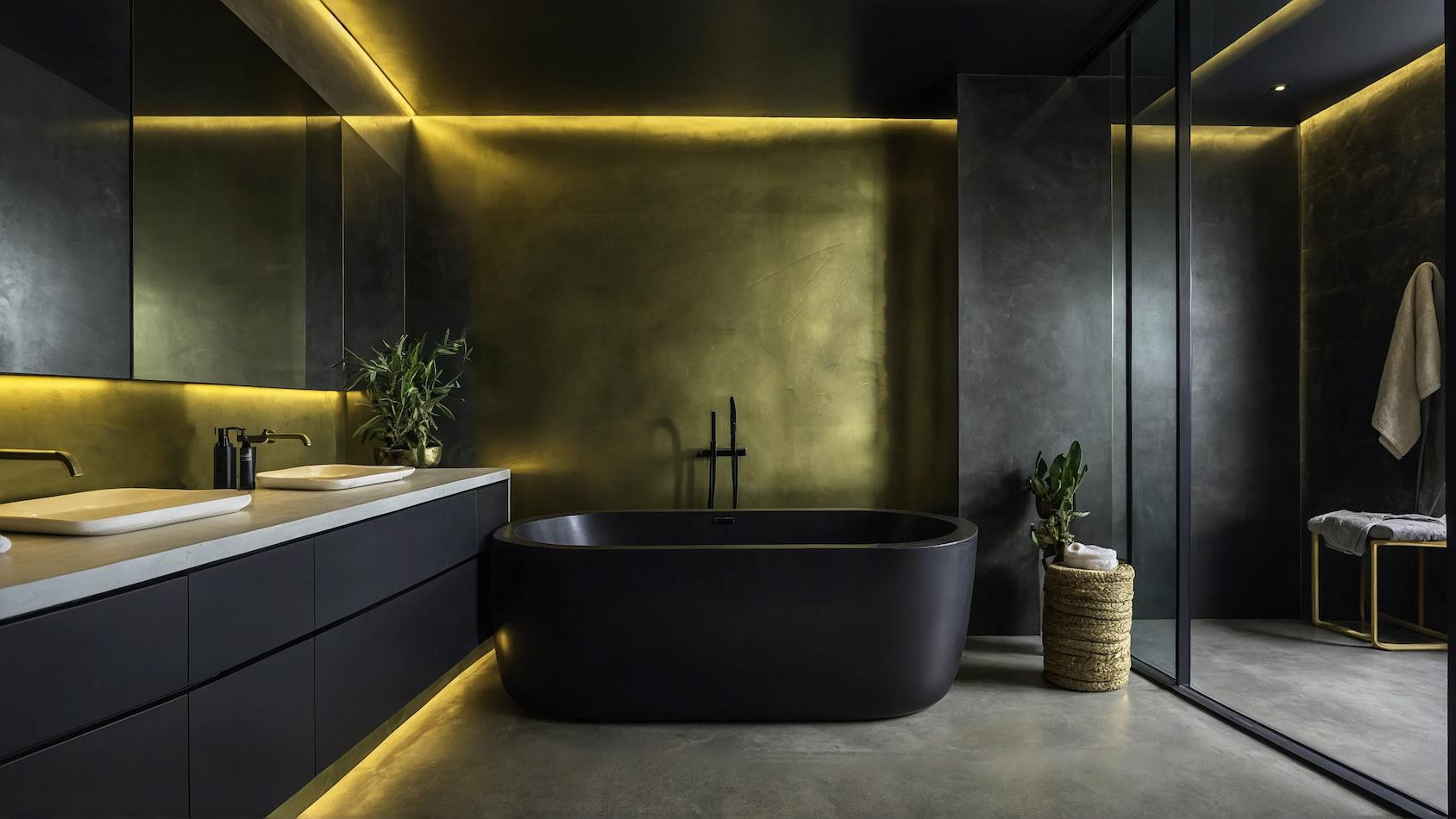
Microcement earns its price when the tile underneath is sound and you want one continuous finish for the floor and shower walls, as in our microcement bathroom projects. At 2 to 3 mm thick, it leaves thresholds and door clearances where they are.
Installation takes 3 to 14 days, depending on project size, substrate condition, the number of layers, and the system installed, and the surface is generally ready for use about 48 hours later.
What Mistakes Turn Microcement Over Tile Into a Bad Investment?
Almost every failure traces back to preparation rather than the material, and each one below has a simple check that prevents it. Ask your installer how they handle all five.
Contact Craftex with your room size and a few photos of the existing tile, and we will connect you with a certified installer who can assess it before you price microcement vs. tile.
Read next: Can Microcement Be Applied Over Existing Tile Without Removing It?
Frequently Asked Questions
Does microcement work with underfloor heating?
Yes. Microcement is compatible with underfloor and radiant heating systems, and at 2 to 3 mm it adds very little above the heating layer. Tell your installer which heating system you have before preparation starts.
Is microcement more slippery than tile?
It does not have to be. Your installer can add an anti-slip treatment for bathroom floors and other wet surfaces, and the four textures range from smooth to grainier, each built for a different level of traffic.
Can you repair microcement if it chips or cracks?
Yes. Your installer can fill small chips and cracks, reseal them, and recoat larger areas to keep the color even. Since cracks usually start with substrate movement, a lasting repair fixes that movement first.
How can I see the colors before choosing?
Order a physical sample. Craftex sells Eco-Cement color samples for $50 for a 12-by-12-inch panel and $75 for a 24-by-24-inch panel. Microcement shifts under different light, so check the shade in your own room.
Sources
- This Old House, Cost To Install Ceramic Tiles (2026 Guide), updated March 2026.
- Bob Vila, How Much Does Tile Installation Cost?, updated September 2023.
- Bob Vila, How to Seal Grout, updated June 2024.
- InterNACHI, Standard Estimated Life Expectancy Chart for Homes.
- NKBA | KBIS, 2026 Bath Trends Report, November 2025.
- Fine Homebuilding, Three Ways to Waterproof Tile Showers.